
Backyards & side yards
Create practical green space where shade, narrow access or repeated use makes living lawn difficult to maintain.
Palm Beach County service
Artificial turf can turn a difficult side yard, worn lawn or small backyard into more useful space. A dependable installation begins with the property: how water moves, how the area will be used, what surrounds it and which elevations must remain fixed. Base preparation, drainage, seam layout, edge restraint, infill and clean transitions to patios, stepping stones and pool decks matter as much as the turf style.
Fully Licensed & Insured · License I-22558
Common reasons
Visible surface changes are useful clues, but they do not always reveal the complete condition below. During a site visit, we look at the affected area in context: nearby edges, drains, thresholds, roots, runoff and the age of surrounding work.
Designed around daily use
A useful turf plan starts with the activity, surrounding materials and maintenance expectations—not only the blade style.
Create practical green space where shade, narrow access or repeated use makes living lawn difficult to maintain.
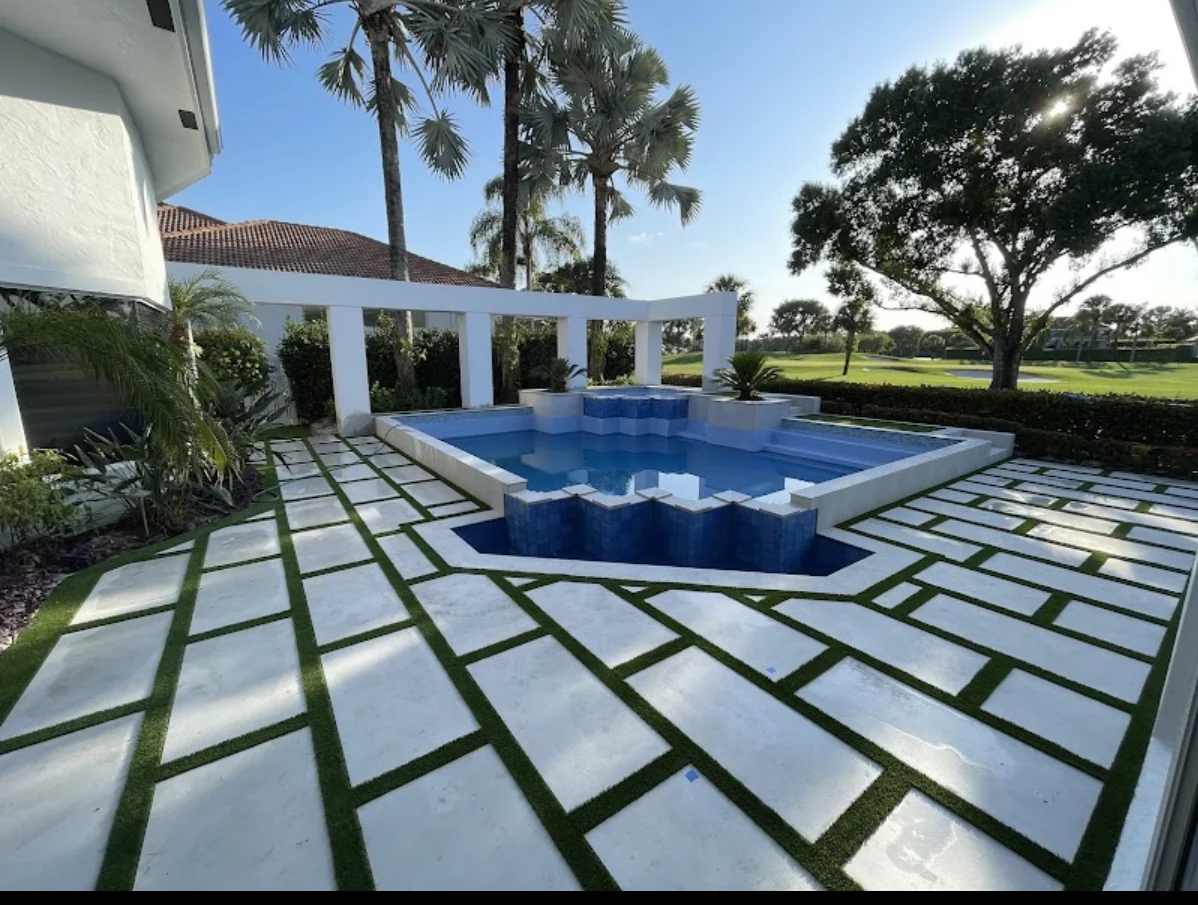
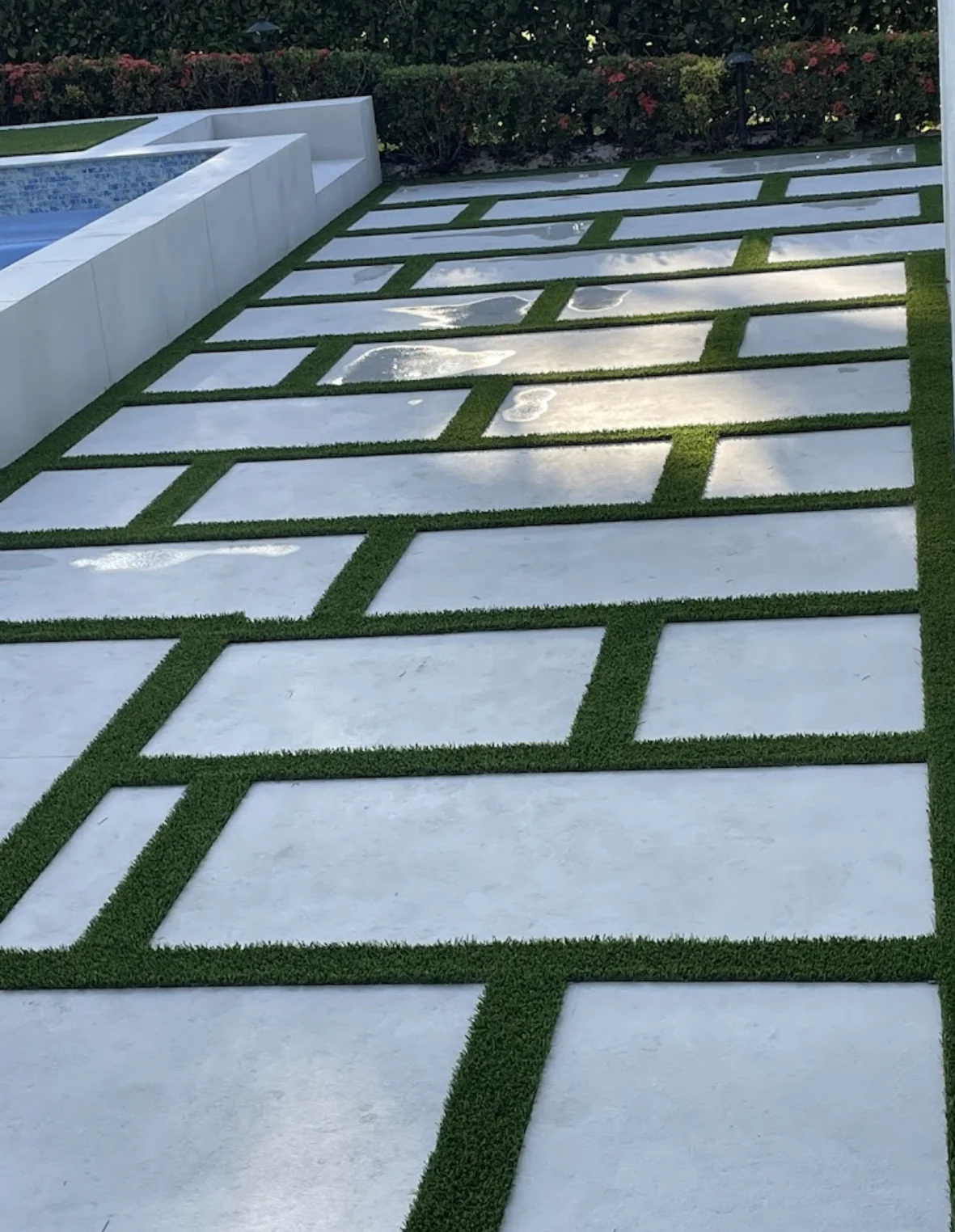
Combine large-format pavers with planned turf strips, consistent spacing and carefully finished cuts.
Meet pool decks and patios at sensible elevations while keeping splash water, runoff and bare-foot use in mind.
Plan for drainage, rinsing, debris removal, edge security and a realistic ongoing cleaning routine.
Our scope
Artificial turf is not a substitute for drainage. Water still needs a workable path through and beneath the system and away from buildings, pool decks and neighboring properties. Turf installed over an unresolved low area can conceal the symptom without correcting the site.
Before work begins, the estimate describes what will be disturbed, what can be saved, how the area will be prepared and what finished variation is realistic. That makes it easier to compare recommendations and helps avoid surprises once the surface is opened.
We also look beyond the immediate work line. A repair or installation should meet garages, doors, drains, coping, sidewalks and landscape edges cleanly. If another trade is needed for plumbing, structural, pool or irrigation work, that coordination is identified early.
Review drainage, intended use, access and adjacent elevations
Excavate unsuitable material and prepare a compacted, draining base
Plan turf direction, seams and cuts to reduce visible transitions
Fit the system carefully around pavers, drains, coping and landscape edges
Secure the perimeter and groom infill for the selected application
Materials & options
Samples are considered in the actual setting whenever possible. Florida light, shade and surrounding finishes can make a small showroom sample look very different outdoors.
Availability, suitability and manufacturer requirements are confirmed for the final selection. We avoid promising an exact match to older weathered material until a sample has been compared at the property.
What supports the visible finish
The green surface is only one part of the work. These supporting decisions help the installation fit the property and remain serviceable.
Unsuitable material and organic growth should not remain beneath the finished system. Excavation, aggregate and compaction are sized for the property and use.
Permeable turf still needs a safe destination for water. Roof runoff, pool-deck flow, drains and neighboring elevations are reviewed before installation.
Turf direction, seam placement, perimeter support, precise cuts and the selected infill affect how the completed surface looks and performs.
Direct sun can warm turf. Shade and material choices affect comfort, while debris removal, grooming and pet-area care remain part of ownership.
Pricing the complete scope
Area size is only one factor. Access, removal and disposal, excavation depth, base correction, drainage, curves, seam count, narrow turf strips, edge conditions, product selection and transitions to existing pavers or pool decks can all change the work.
We do not quote an unsupported square-foot price without understanding the property. A useful estimate explains what will be removed, how the base will be prepared, where water can go, how edges will finish and which conditions could change after excavation.
An honest fit assessment
Unresolved runoff, unstable retaining edges, active root conditions or a space that would benefit from living shade planting may call for another approach. Concentrated furniture or cooking areas may be better served by pavers.
Some projects work best as a balanced plan with pavers, planting and a smaller artificial-turf area. The recommendation should fit the site and maintenance expectations rather than force turf into every available space.
Documented Palm Beach Pavers work
A documented Jupiter backyard project pairing large-format pavers with artificial turf to create organized walking surfaces, green joints and a coordinated poolside outdoor area.
The project photography documents large-format pavers, planned turf joints, a connected green area and poolside outdoor circulation. The case study describes only what the available record supports and does not invent a product brand or hidden construction condition.
A clear sequence
Tell us what you see, how long it has been happening and whether drainage or other construction is involved.
We review surface condition, edges, access, elevations and likely causes before defining a scope.
The proposal describes the work area, preparation, materials, exclusions and expected result in straightforward language.
We confirm timing, protect adjacent property and keep you informed through completion.
Palm Beach Pavers work
Selected photographs from completed work and documented repair conditions across Palm Beach County.
Project documentation
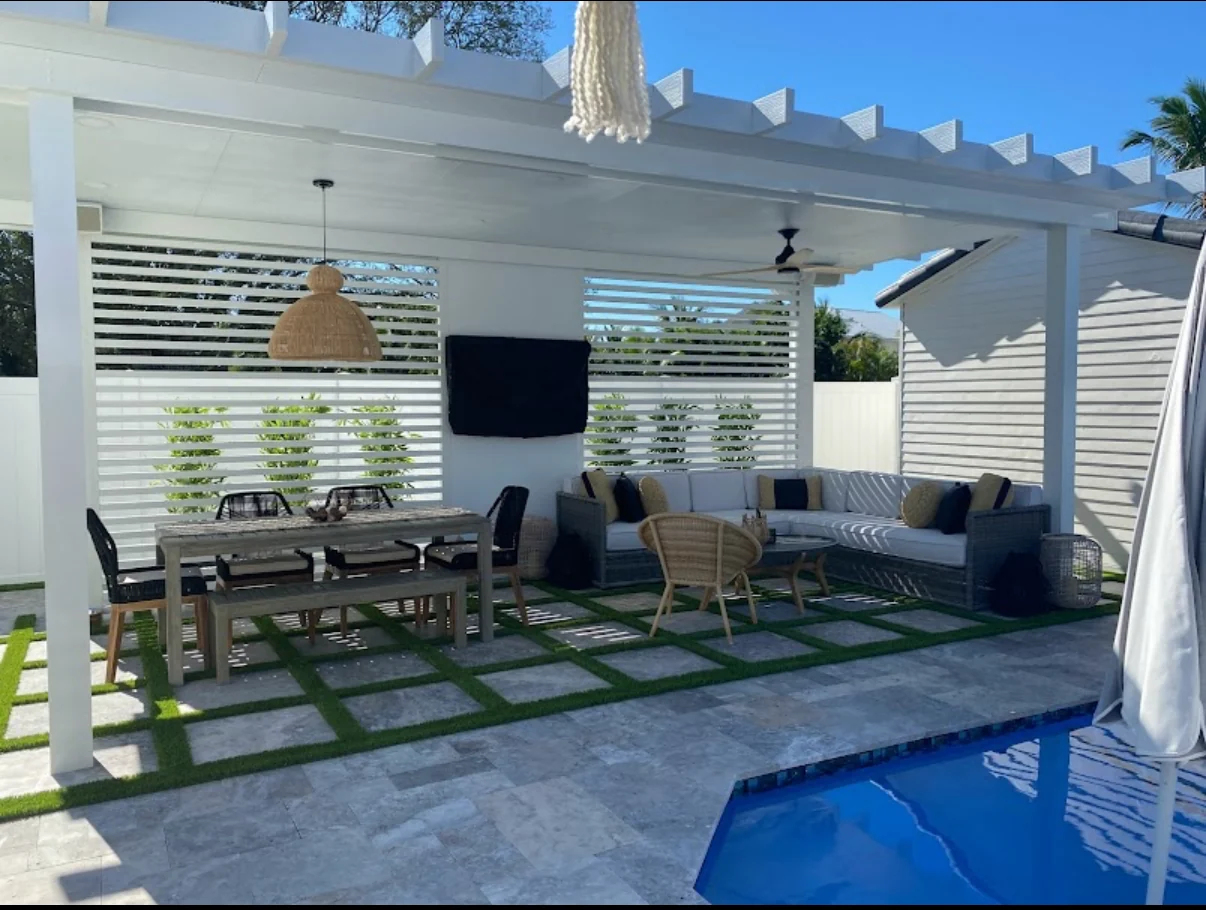
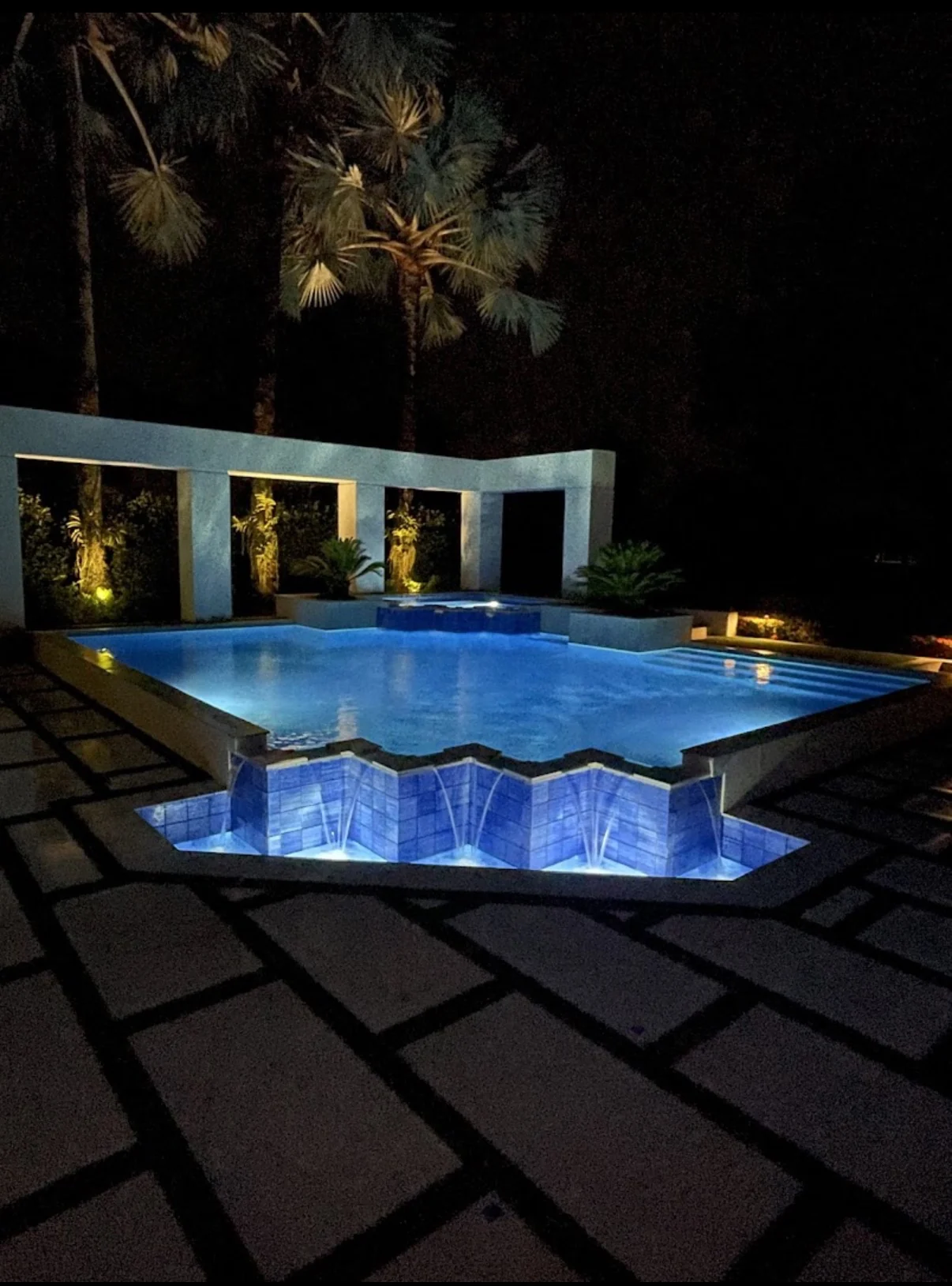
Wide views and close details show how artificial turf meets pavers, pool decks, planting beds and other finished edges. The photographs on this page document completed Palm Beach Pavers work and the outdoor transitions we evaluate.
Questions homeowners ask
It can become warm in direct sun. Shade, blade and infill choices, surrounding hardscape and occasional rinsing can affect comfort, but no outdoor turf should be promised to stay cool in full Palm Beach County sun.
Yes, with careful elevation, edge and drainage planning so the transition remains clean and usable.
Yes. The paver spacing, cuts, edge support, finished height and drainage need to be planned as one assembly so narrow turf strips remain neat and serviceable.
No. It needs debris removal, occasional grooming and care appropriate to pets, trees, shade and drainage conditions.
Area size, access, excavation, base correction, drainage, the number of cuts and seams, edge conditions, turf and infill selection, and transitions to pavers or pool decks all affect the scope. We inspect the property before pricing.
No. A site with unresolved runoff, unstable edges, difficult tree-root conditions or a use better served by living landscape may need another approach. The recommendation should fit the property rather than force turf into every space.
A straightforward next step
We are happy to evaluate the area, explain what we see and provide a clear estimate for the work that makes sense.