
The most useful answer begins with the condition at the property. Materials, age, base, drainage and previous work can change what is practical, so this article is a starting point—not a diagnosis from a photograph.
Preserve serviceable original material
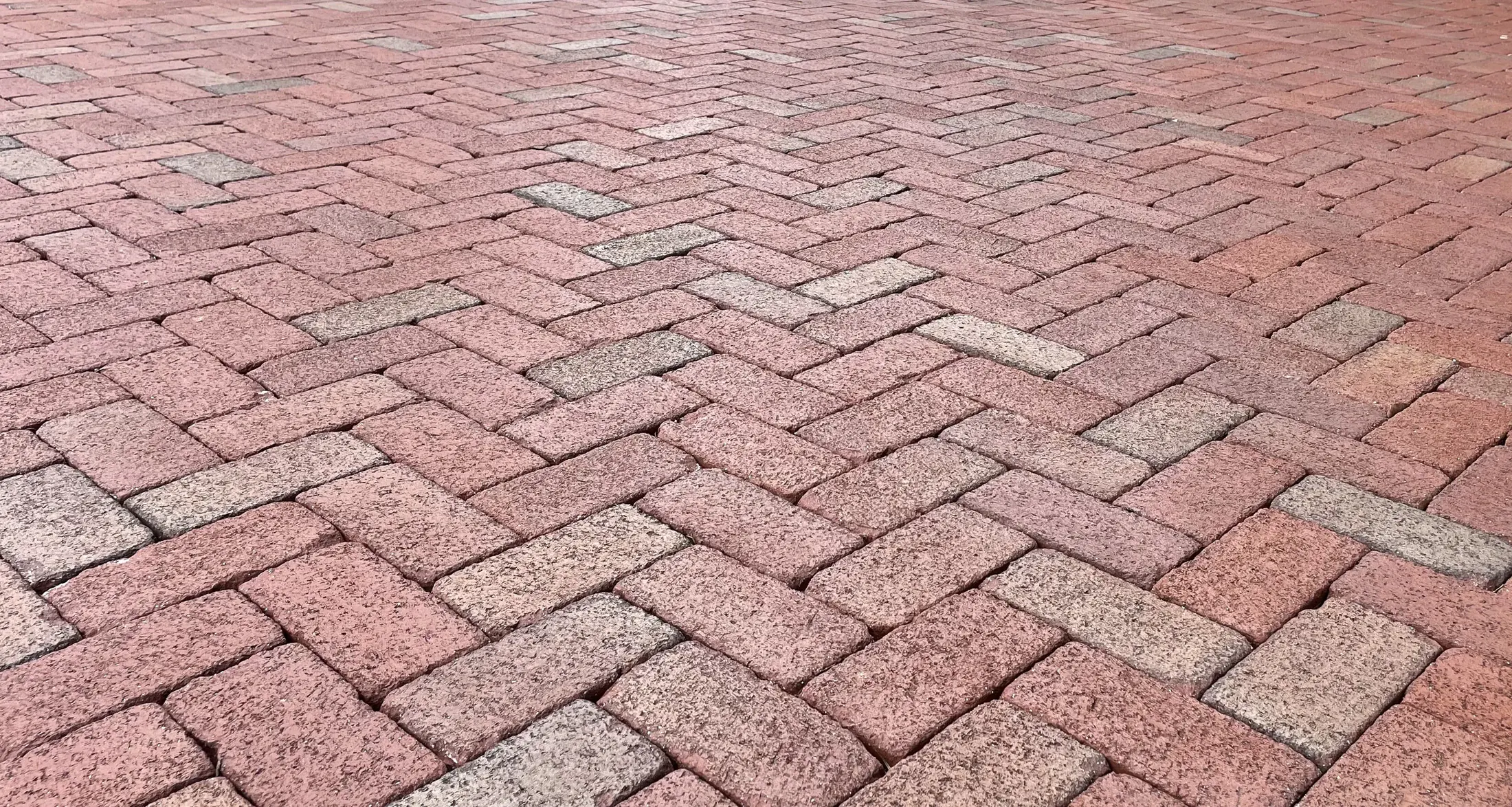
Old Chicago brick gains character through irregular color, worn edges and historic markings. During a repair, usable originals can often be lifted, sorted and reset rather than discarded.
Replace only what cannot serve
Severely spalled, broken or missing units may need compatible reclaimed replacements. Blending is a craft: exact uniformity is neither realistic nor desirable with authentic brick.
Repair the assembly, not only the brick
Wandering courses, failed mortar and settlement often point to support or edge problems. Correcting those conditions helps the restored surface keep its alignment.
What to notice before requesting an estimate
Take one wide photograph that shows the affected area in relation to the house, driveway, pool or landscape. Add close views of movement, joints, cracks or staining, plus any nearby drain, downspout or edge. Note whether the condition changes after rain and whether it has spread over time.
A clear scope should explain what is visible, what may be contributing, which area will be opened or rebuilt and what result is realistic. If an underlying condition cannot be confirmed until pavers are lifted, that uncertainty should be stated rather than hidden.