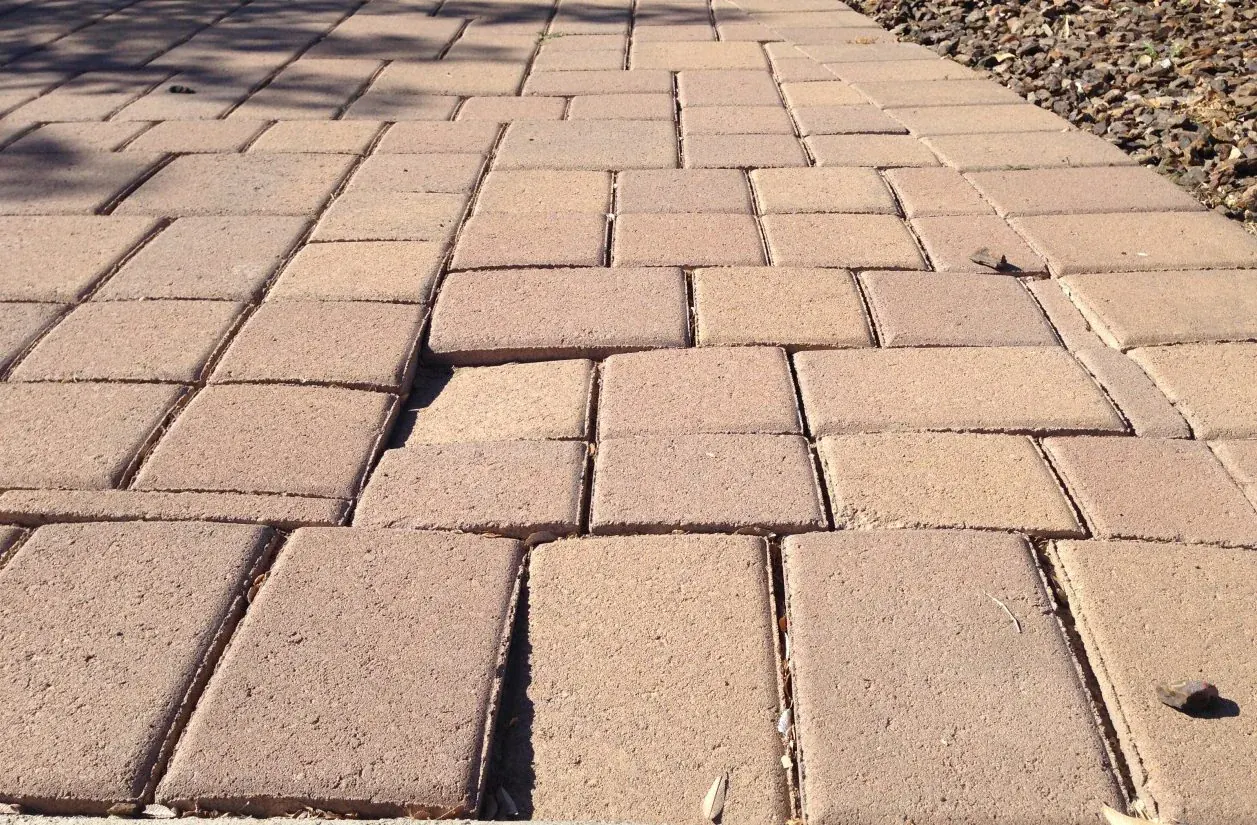
Sinking Pavers
Homeowners may see a bowl-shaped low area, widening joints or pavers sitting below the surrounding field.
Likely causeBase washout, incomplete compaction, leaks or concentrated runoff can remove uniform support.
Typical repair approachLift the affected units, correct the verified cause, rebuild support and reset the existing pattern.
Learn more →Uneven Pavers
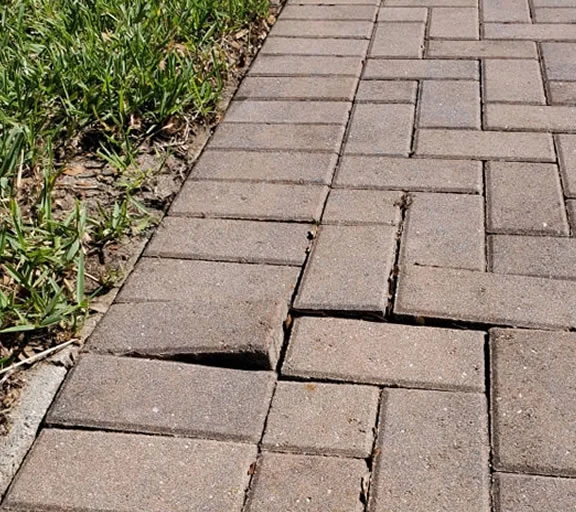
Changes in elevation can create rough transitions, rocking units and uncomfortable walking areas.
Likely causeSettlement, roots, traffic and disturbed base material may move one section differently from the next.
Typical repair approachOpen enough of the area to meet stable paving, restore the proper elevation and reset the transition.
Learn more →Loose Pavers
Individual units may rock underfoot or shift when vehicles turn across the surface.
Likely causeLost joint material, weak edges or disturbed bedding often allow movement to spread.
Typical repair approachStabilize the supporting area or edge, then reset and rejoin the affected courses.
Learn more →Cracked or Damaged Pavers
A homeowner may notice broken corners, surface damage or individual units that no longer sit correctly.
Likely causeImpact, unsupported areas, edge stress and material wear are common contributors.
Typical repair approachReplace only unusable units where practical and correct any support problem below them.
Learn more →Trip Hazards
Raised or sunken edges can form where people walk, park or enter the home.
Likely causeLocalized settlement, root pressure and transitions between materials frequently create the height change.
Typical repair approachRebuild the affected transition to a practical grade while preserving stable surrounding work.
Learn more →Standing Water / Drainage Problems
Puddles may remain after rain or water may repeatedly cross the same joints and low spots.
Likely causeChanged grades, clogged drains, erosion and concentrated roof or landscape runoff may be involved.
Typical repair approachRestore positive flow or the agreed drainage path before resetting the affected surface.
Learn more →Failed Edges
Border courses may spread, rotate or drop toward a landscape bed, roadway or unsupported shoulder.
Likely causeMissing restraint, erosion, vehicle loading or disturbed adjacent material can weaken the perimeter.
Typical repair approachRebuild the edge support or restraint and reconnect loose courses to the stable field.
Learn more →Base Washout
Recurring depressions, open joints and sand loss can indicate that supporting material has moved away.
Likely causeWater entering through an edge, drain area or concentrated discharge can carry fine material from the base.
Typical repair approachLocate the water path, remove unstable material and reconstruct the support before resetting pavers.
Learn more →