
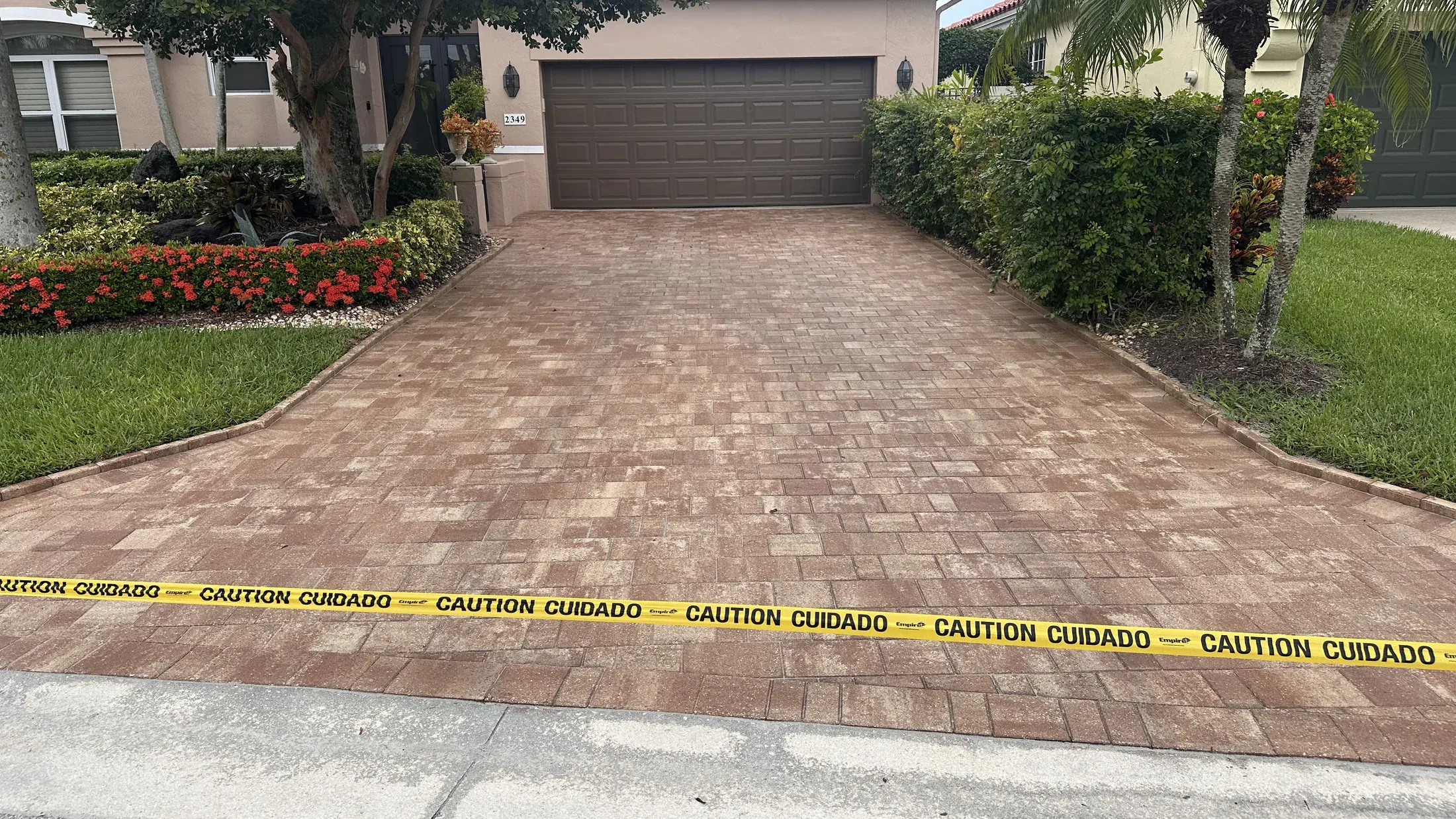
The most useful answer begins with the condition at the property. Materials, age, base, drainage and previous work can change what is practical, so this article is a starting point—not a diagnosis from a photograph.
What sealer can do
A compatible sealer may deepen color, reduce absorption and help stabilize suitable joint material. It can also make some routine cleaning easier. It cannot correct settlement, drainage or a failing base.
Why preparation matters
Moisture, residual cleaners, efflorescence and old coatings can affect the finish. Cleaning, drying and weather conditions are part of the installation—not minor steps before the “real” work.
Choose for the surface
A glossy driveway finish may be wrong for a wet pool deck or soft historic brick. Slip, breathability, prior coatings and maintenance expectations should guide product choice.
What to notice before requesting an estimate
Take one wide photograph that shows the affected area in relation to the house, driveway, pool or landscape. Add close views of movement, joints, cracks or staining, plus any nearby drain, downspout or edge. Note whether the condition changes after rain and whether it has spread over time.
A clear scope should explain what is visible, what may be contributing, which area will be opened or rebuilt and what result is realistic. If an underlying condition cannot be confirmed until pavers are lifted, that uncertainty should be stated rather than hidden.