
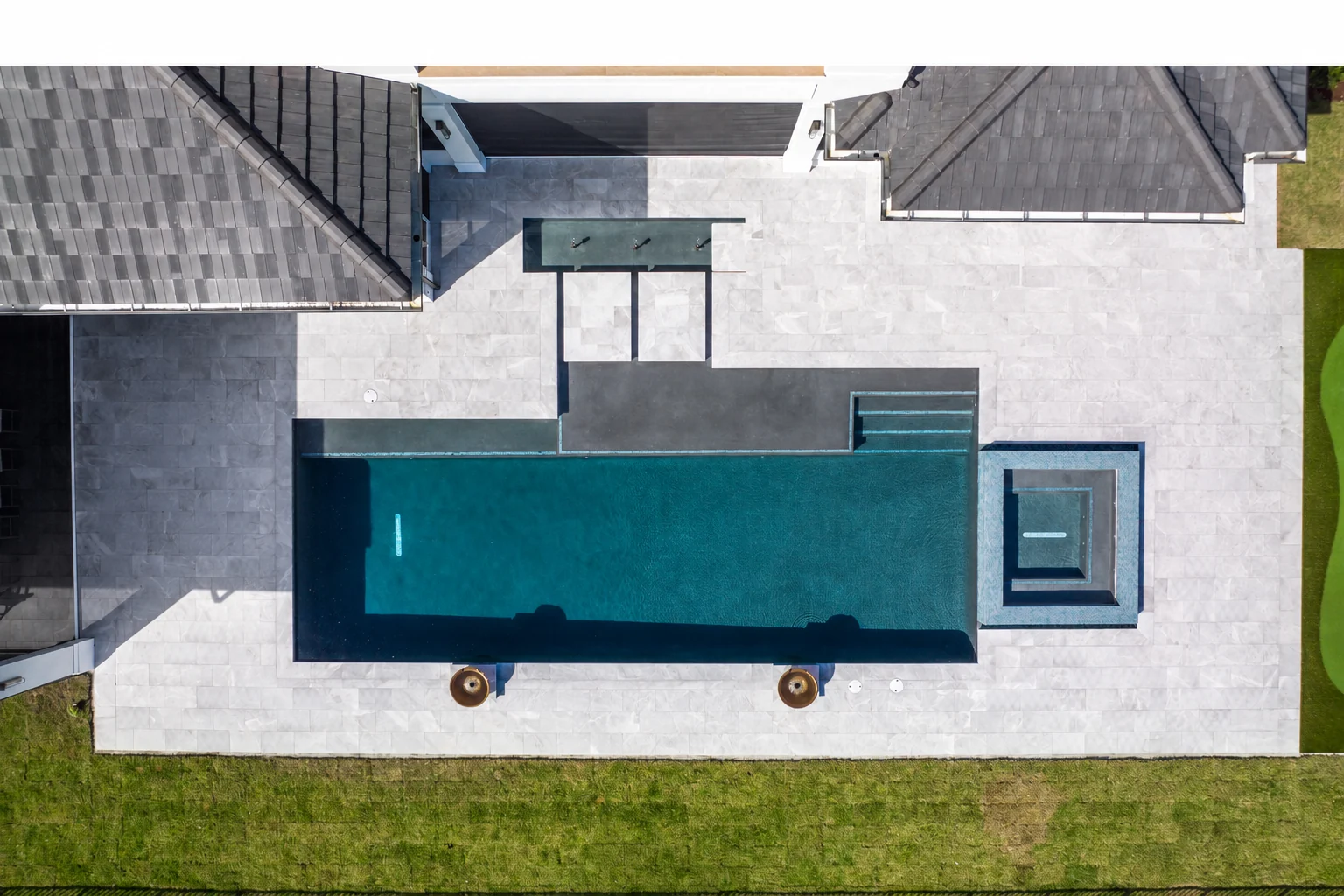
The most useful answer begins with the condition at the property. Materials, age, base, drainage and previous work can change what is practical, so this article is a starting point—not a diagnosis from a photograph.
Begin with daily use
Bare feet, children, pets, shade, furniture and pool chemicals shape the decision. A material that looks good in a dry showroom may feel different in midday sun or when wet.
Compare complete systems
Concrete pavers, natural stone and porcelain each have suitable applications. Include coping, substrate, joints, drains and edge pieces in the comparison—not only field-unit price.
Use full-size samples outdoors
Color and texture change in Florida light. View samples wet and dry, and ask how the selected finish is cleaned and maintained.
What to notice before requesting an estimate
Take one wide photograph that shows the affected area in relation to the house, driveway, pool or landscape. Add close views of movement, joints, cracks or staining, plus any nearby drain, downspout or edge. Note whether the condition changes after rain and whether it has spread over time.
A clear scope should explain what is visible, what may be contributing, which area will be opened or rebuilt and what result is realistic. If an underlying condition cannot be confirmed until pavers are lifted, that uncertainty should be stated rather than hidden.