
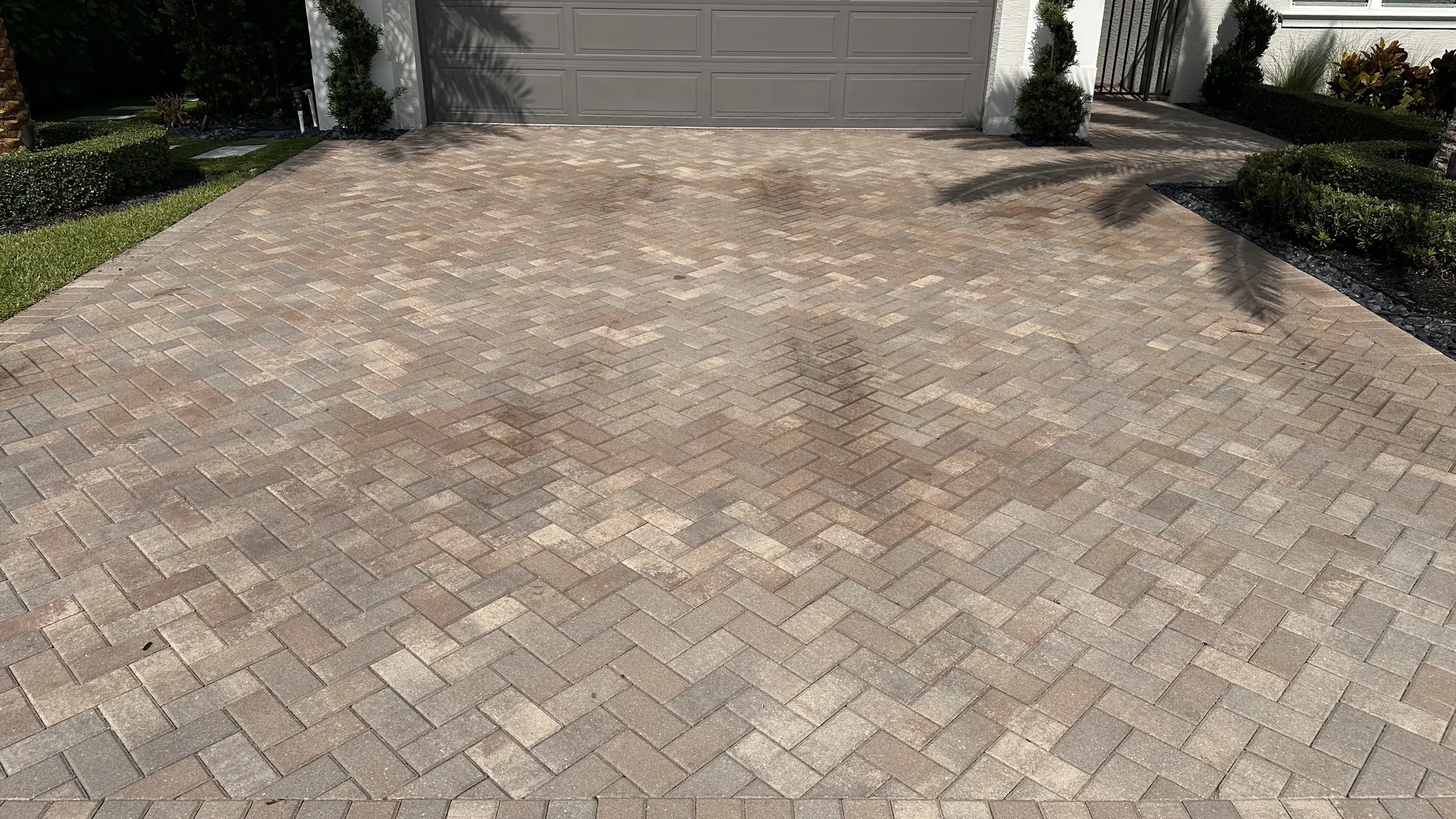
The most useful answer begins with the condition at the property. Materials, age, base, drainage and previous work can change what is practical, so this article is a starting point—not a diagnosis from a photograph.
Why marks appear
A vehicle tire warms during driving. When it stops or turns on a driveway, rubber compounds and friction can transfer residue, especially on light pavers or certain coatings.
Clean carefully
Begin with the mildest method suitable for the paver and existing sealer. Harsh solvents or concentrated pressure can create a larger visual problem than the original mark.
Reduce repeat marking
Avoid sharp stationary turns when practical, keep the surface clean and maintain compatible coatings correctly. No outdoor driveway finish can promise complete immunity from vehicle residue.
What to notice before requesting an estimate
Take one wide photograph that shows the affected area in relation to the house, driveway, pool or landscape. Add close views of movement, joints, cracks or staining, plus any nearby drain, downspout or edge. Note whether the condition changes after rain and whether it has spread over time.
A clear scope should explain what is visible, what may be contributing, which area will be opened or rebuilt and what result is realistic. If an underlying condition cannot be confirmed until pavers are lifted, that uncertainty should be stated rather than hidden.