
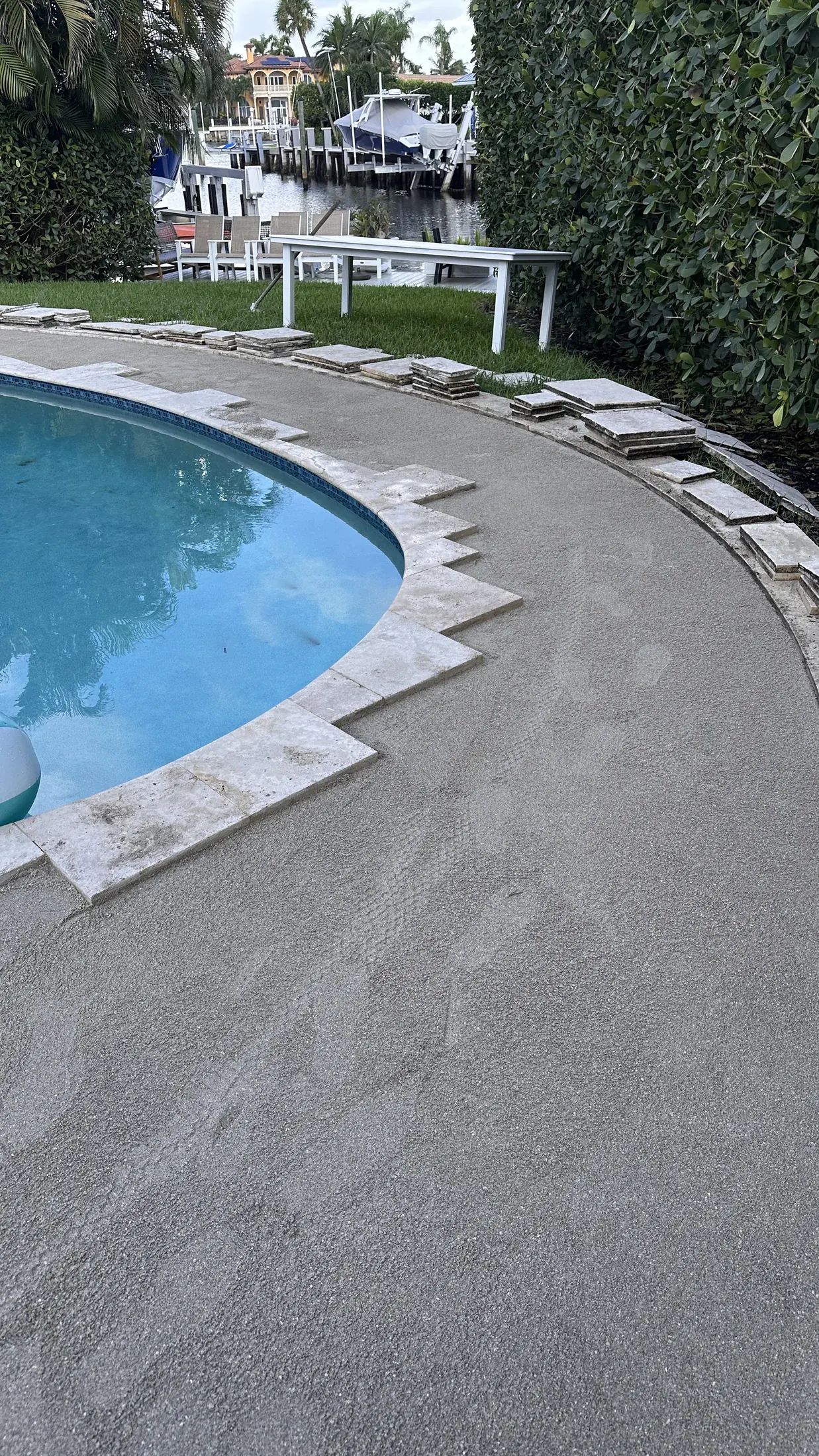
The most useful answer begins with the condition at the property. Materials, age, base, drainage and previous work can change what is practical, so this article is a starting point—not a diagnosis from a photograph.
Start with where the water comes from
Rain may fall directly on the driveway or arrive from a roof, neighboring surface, landscape bed or uphill area. Concentrated flow can overwhelm a low point that stayed dry during lighter weather.
Check the intended path
Paving should move water toward an appropriate outlet without sending it into a garage, foundation or adjacent property. Clogged channel drains and settled aprons can interrupt that path.
A drain is not always the first answer
Sometimes resetting a localized area restores positive flow. Other sites need a drain, swale or coordinated discharge improvement. The right solution depends on actual elevations and a maintainable outlet.
What to notice before requesting an estimate
Take one wide photograph that shows the affected area in relation to the house, driveway, pool or landscape. Add close views of movement, joints, cracks or staining, plus any nearby drain, downspout or edge. Note whether the condition changes after rain and whether it has spread over time.
A clear scope should explain what is visible, what may be contributing, which area will be opened or rebuilt and what result is realistic. If an underlying condition cannot be confirmed until pavers are lifted, that uncertainty should be stated rather than hidden.