
The most useful answer begins with the condition at the property. Materials, age, base, drainage and previous work can change what is practical, so this article is a starting point—not a diagnosis from a photograph.
A drain concentrates water
The purpose of a drain is to collect flow, so the paving around it experiences repeated water movement. Gaps at the drain edge, an unstable collar or an outlet problem can let fine supporting material migrate. The pavers then lose uniform support and settle toward the opening.
Blockage and elevation can compound the problem
Leaves, sediment and roots may reduce drain capacity. If surrounding pavers have already settled, water can pond before it reaches the inlet. A drain set too high cannot collect a low area, while one set too low without proper support may become the center of the depression.
Repair the system, not only the ring of pavers
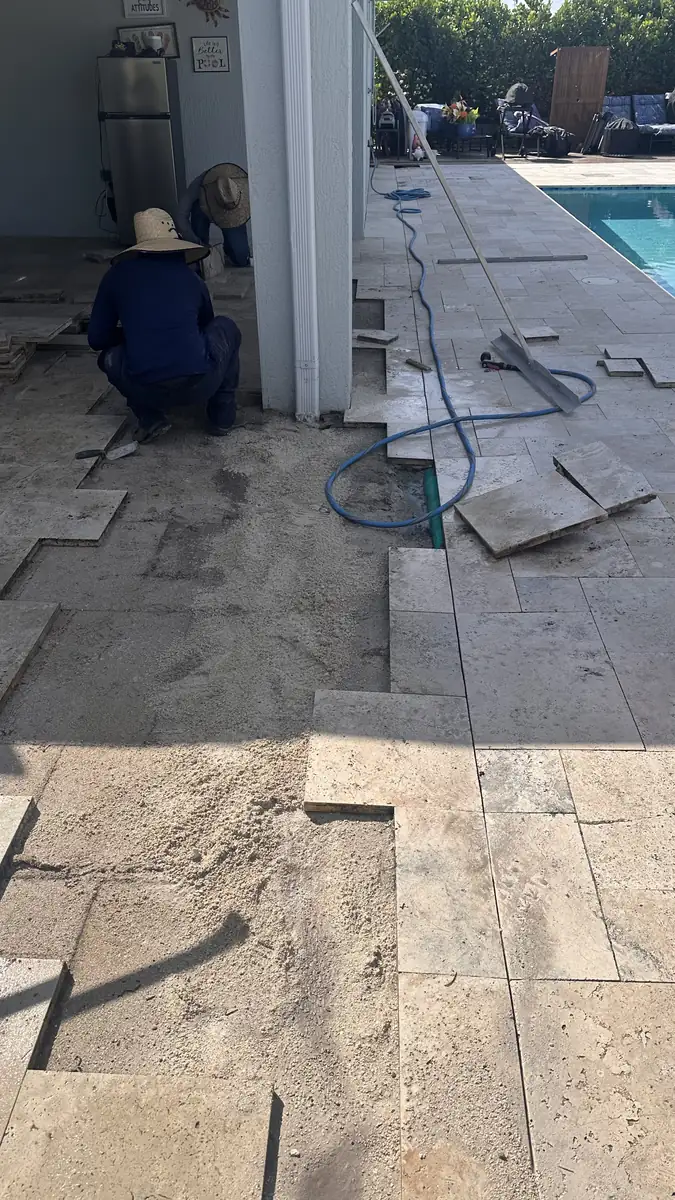
Affected units are lifted so the drain edge, bedding and base can be inspected. The correct scope may include rebuilding support, restoring grade, cleaning or correcting a connection, or coordinating drainage work beyond the paving trade. Resetting the surface without treating the verified cause can allow settlement to return.
What to notice before requesting an estimate
Take one wide photograph that shows the affected area in relation to the house, driveway, pool or landscape. Add close views of movement, joints, cracks or staining, plus any nearby drain, downspout or edge. Note whether the condition changes after rain and whether it has spread over time.
A clear scope should explain what is visible, what may be contributing, which area will be opened or rebuilt and what result is realistic. If an underlying condition cannot be confirmed until pavers are lifted, that uncertainty should be stated rather than hidden.