
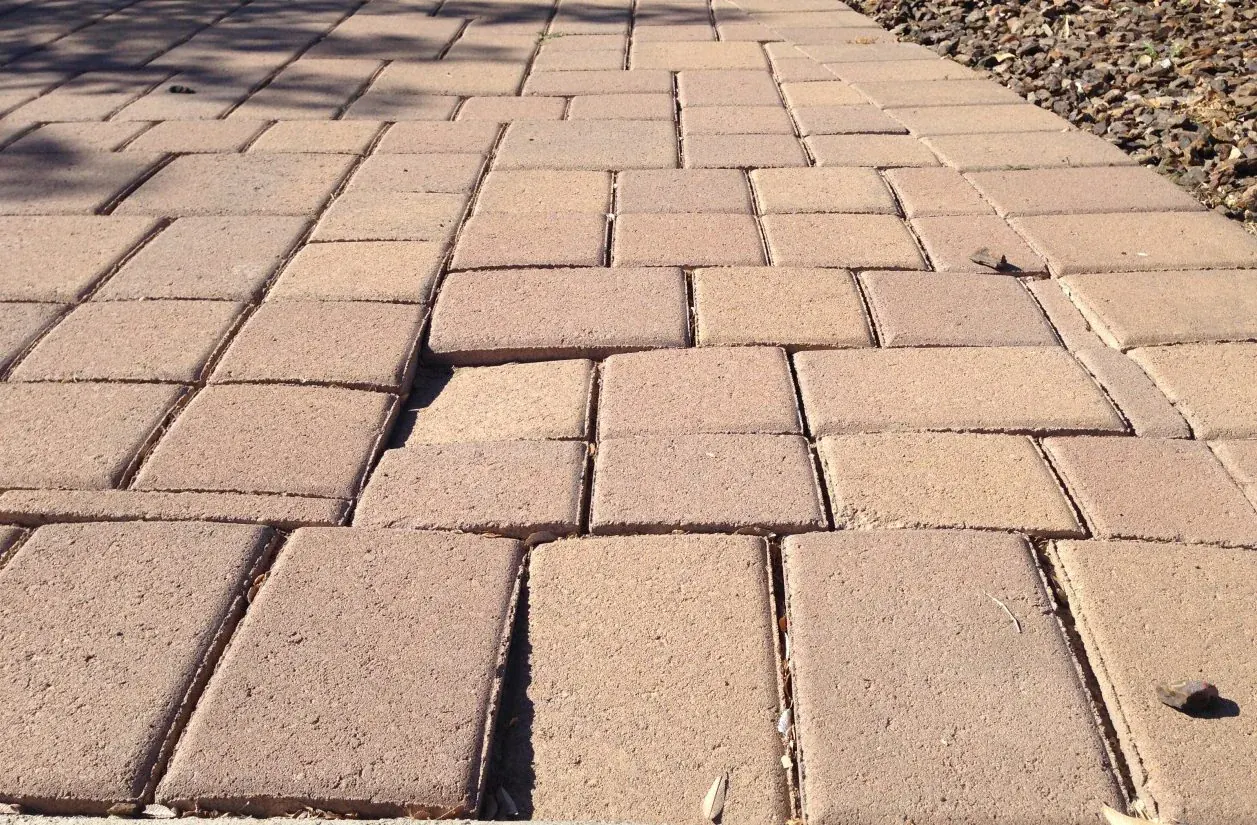
The most useful answer begins with the condition at the property. Materials, age, base, drainage and previous work can change what is practical, so this article is a starting point—not a diagnosis from a photograph.
When targeted repair makes sense
If settlement is localized and the surrounding field, borders and materials remain serviceable, repairing only the affected area is often practical. This is especially useful near an apron, garage transition, drain, downspout, failed edge or previous utility cut. The goal is to disturb sound work only when necessary to tie the repair in properly.
What happens during a lift-and-reset repair
Reusable pavers are lifted and organized, not discarded into a mixed pile. The opened area is checked for voids, loose material, erosion, roots or an unsupported edge. Failed support is removed and rebuilt to the planned elevation before the original pattern is restored. Joint material and transitions are finished after alignment is checked.
When replacement may be more sensible
Widespread base failure, severe material deterioration, incorrect overall drainage or many unrelated past patches can change the decision. If elevations need correction across most of the driveway, repeatedly extending a small repair may cost more and produce a less coherent result than planned reconstruction.
Matching the existing surface
Saved pavers are reset wherever possible because their weathered color already belongs to the driveway. Older units may differ from current factory colors, sizes or textures, so an exact new-material match is not always realistic. Stored extras can be valuable. A thoughtful scope explains blending options and likely variation before work begins.
Questions to ask before approving the work
Ask what likely caused the movement, how far the pavers will be lifted, what supporting material will be replaced and how drainage or edge conditions will be handled. The estimate should also describe what happens if the opened area reveals a larger void or hidden line than surface inspection suggested.
What to notice before requesting an estimate
Take one wide photograph that shows the affected area in relation to the house, driveway, pool or landscape. Add close views of movement, joints, cracks or staining, plus any nearby drain, downspout or edge. Note whether the condition changes after rain and whether it has spread over time.
A clear scope should explain what is visible, what may be contributing, which area will be opened or rebuilt and what result is realistic. If an underlying condition cannot be confirmed until pavers are lifted, that uncertainty should be stated rather than hidden.